

From startup site to infrastructure-grade platform

From startup site to infrastructure-grade platform
Creative direction: Drew Lyon
Project management: Madeline Seitz
Content strategist: Jessica McDaniel
Lead designer: Marian Brchan
Overview
Background
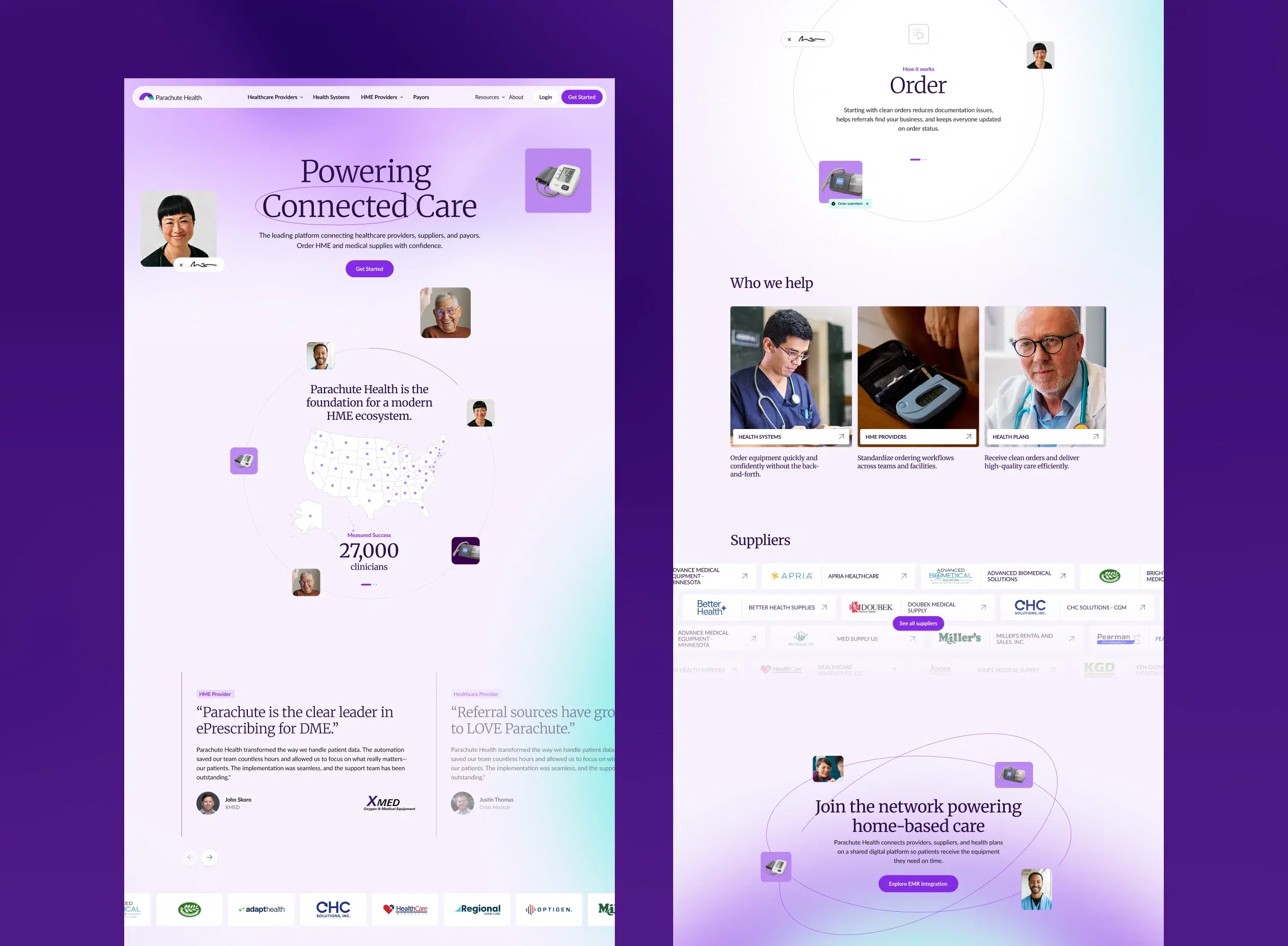
Parachute Health is a digital infrastructure platform for Home Medical Equipment (HME). The company connects 270,000+ clinicians and 3,000+ suppliers through a unified ordering and care management ecosystem, linking clinical providers, HME suppliers, payors, and health systems under one platform
Problem
The existing Squarespace site was built for a startup, not the enterprise infrastructure company Parachute had become. It could not separate messaging for distinct audiences, restricted the marketing team from launching or editing pages without engineering support, and was converting less than 0.2% of visitors.
Solution
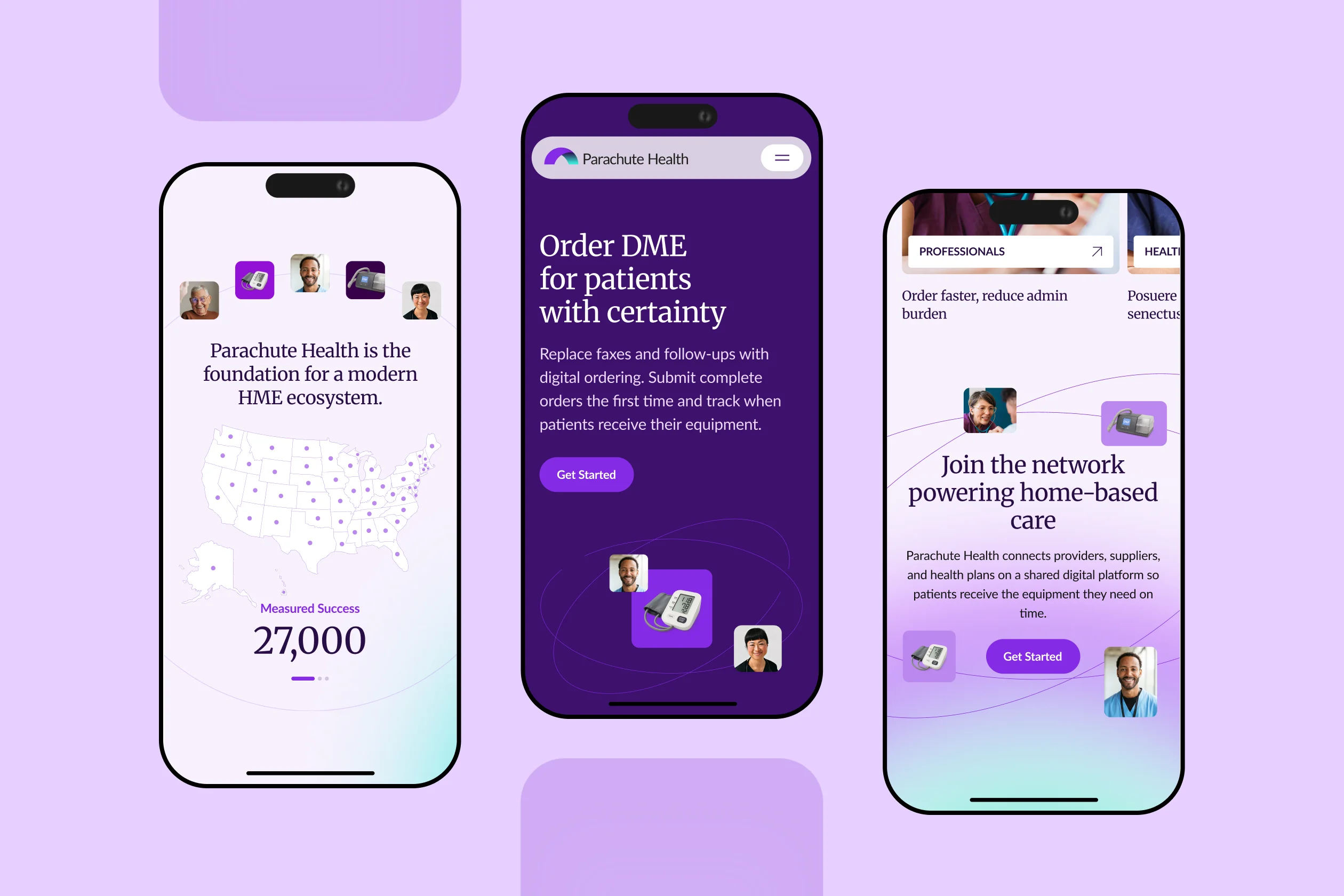
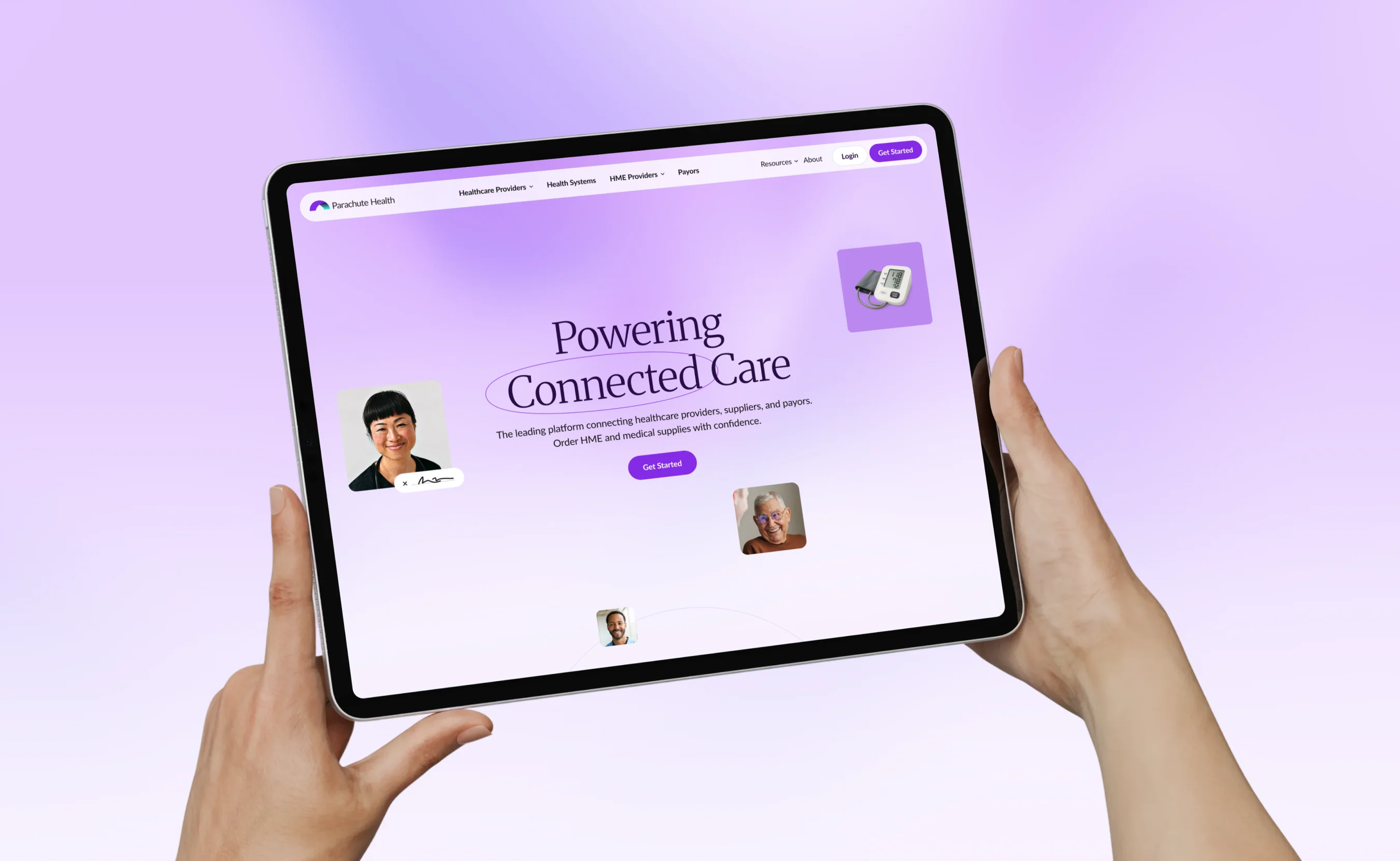
We redesigned and rebuilt parachutehealth.com on WordPress with audience-specific routing, a 500+ page Supplier Info Center and HubSpot forms integrated by audience type. The entire site was deployed inside Parachute’s existing AWS infrastructure — a deliberate choice to keep the site within their HITRUST and SOC 1/SOC 2 environment without requiring a separate hosting stack.
30 day post launch results


A site architecture built around intent, not audience labels
Before the redesign, parachutehealth.com’s audience pages were receiving near-zero direct traffic. Virtually all visits landed on the homepage, where a single path sent every user in the same direction. The problem wasn’t traffic; it was that the site treated 270,000 clinicians and enterprise health systems as one audience with one intent.
We restructured the information architecture around what each audience actually needs when they arrive. A clinician clicking “Sign Up” routes directly into Parachute’s product application flow (dme.parachutehealth.com), with no fields duplicated on the marketing site. An HME provider lands in an audience-specific section with a HubSpot demo form embedded directly on the page. Payors and health systems follow a “Contact Sales” path. Patients see a message directing them to their provider. And each supplier detail page passes the correct supplier ID into the product signup URL through a query string — preserving the referral attribution Parachute needed across hundreds of pages.
The result is a site where every user can find their lane in the first few seconds, and where Parachute’s team can build and launch new pages without engineering involvement.