Limb Lab is an independent prosthetic and orthotic practice with clinics across the Midwest and Arizona. It’s built on a question its clinicians ask every patient: what do you want to do? Running again, holding a grandchild, getting back to work. Most devices are fabricated in-house, patients are often seen within days, and the same clinicians stay with them through every adjustment.
Limb Lab
Built around the question what do you want to do?

Overview
Background
Problem
Limb Lab had outgrown a website built for a smaller practice. Traffic was steady, but the site gave very different people one path. A new amputee fresh from surgery, a longtime prosthetic user comparing providers, and a parent researching a cranial helmet all landed in the same place. Physician referrals, the most important source of new patients, still happened by phone and fax, outside anything the team could see.
Solution
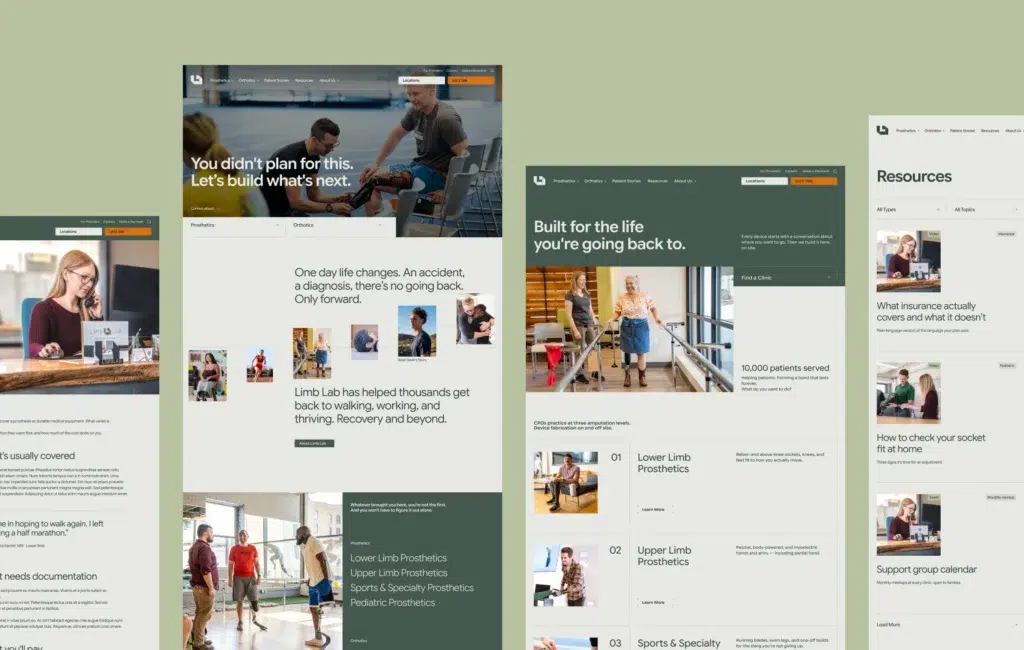
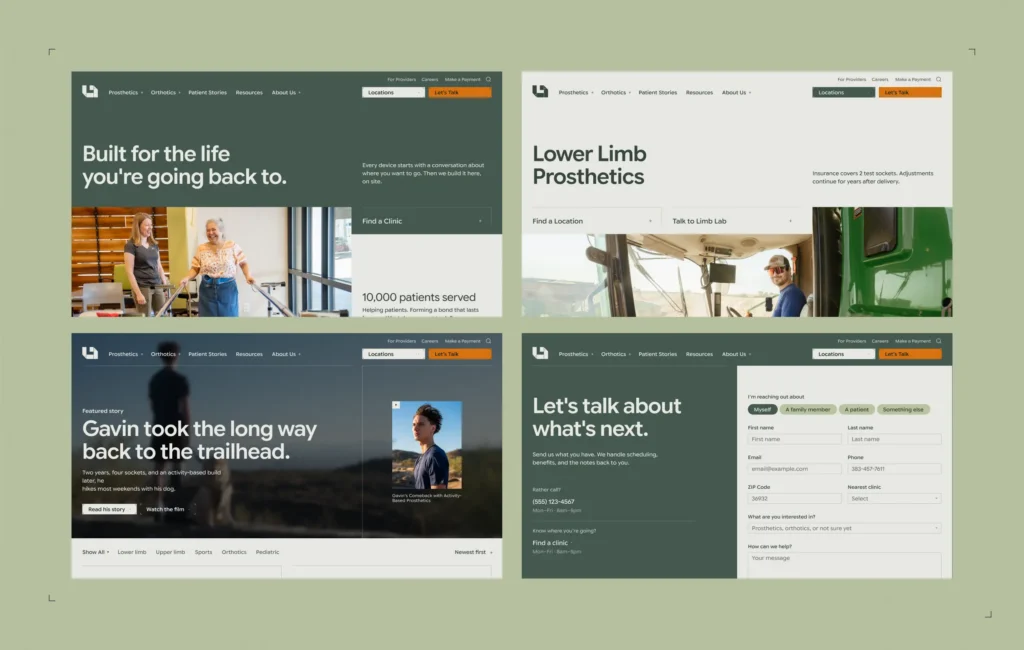
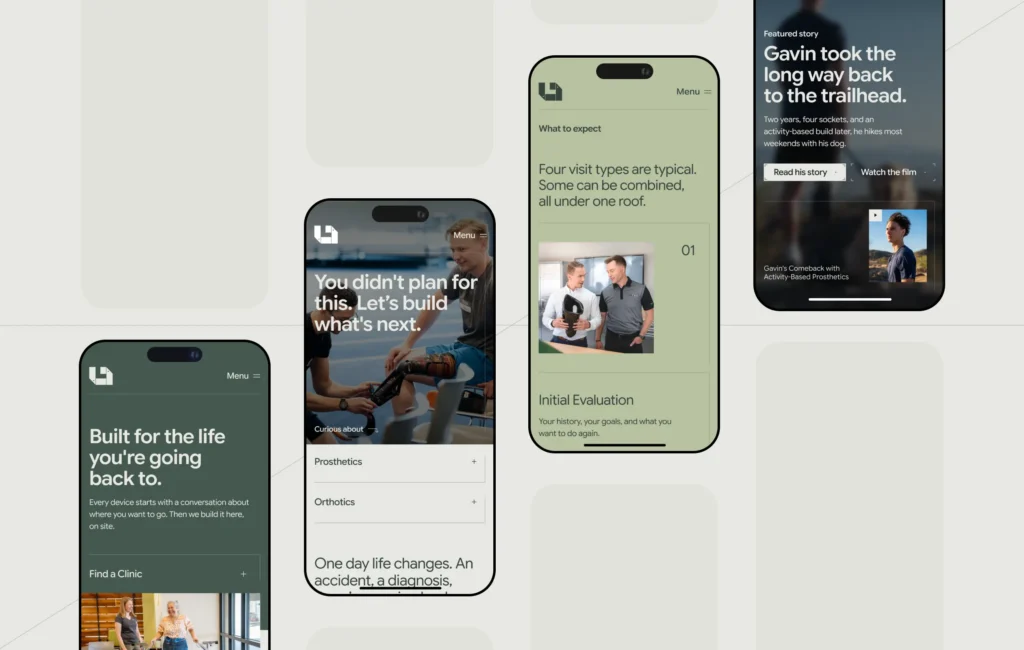
We redesigned and rebuilt limblab.com on WordPress, hosted on WP Engine. The site starts from the patient’s goals, not the device catalog. Each audience gets its own entry point, and physicians get a dedicated referral form. HubSpot routes every referral to the right clinic. Clinician profiles show specialties and credentials, and location pages share one template so each new clinic launches without new design or development.

A referral path that grows with every clinic
Limb Lab’s clinics see toddlers, veterans, athletes and grandparents in the same week. Early concepts opened on a single patient story, and Limb Lab rightly pointed out that not everyone would see themselves in it. So we widened the opening visuals and rebuilt the homepage around what the team is proudest of: the bond between clinician and patient. Client stories run throughout the site instead of sitting on one testimonials page. The brackets in the Limb Lab logo carry through the design, and the fabrication story is told carefully, as hands-on craft without overclaiming.
Most new patients arrive through a physician, so the site had to earn a surgeon’s trust as much as a patient’s. Physicians get their own referral form, and HubSpot routes each one to the right clinic. Clinician bios list device specialties and the patients each clinician works with most. Pediatric prosthetics and cranial helmets have their own pages, so worried parents find answers written for them. Patients outside the network get a destination care path to one contact form, and new locations launch from a shared template.