

The Future of Search is GEO: A Marketer’s Guide to Staying Visible in the AI Era

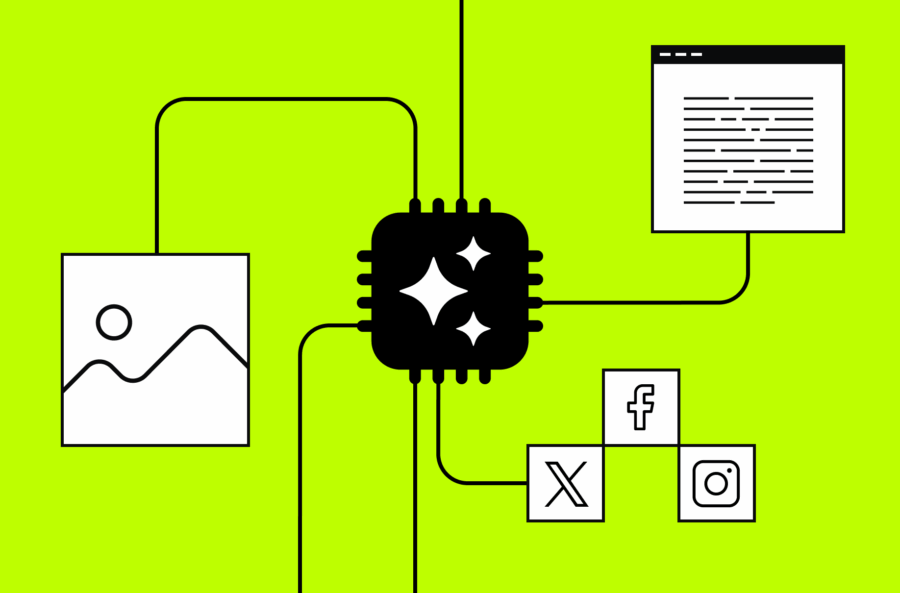
Discover the key insights on how AI-driven search is reshaping digital visibility.
Your SEO Playbook Just Expired, Now What?
Your organic traffic is dropping. You’ve probably noticed it: fewer visitors, lower rankings, campaigns that used to work just. don’t anymore.
If you relate to this, you’re not alone. By next year, it’s projected that more than 30% of all online sessions will start with AI, not search engines. Your customers aren’t just Googling you anymore; they’re asking ChatGPT, Claude, and Perplexity directly. And here’s the critical part: AI decides whether you’re worth mentioning.
Some businesses are already seeing 70% drops in organic traffic. But others, the ones adapting to GEO (also called AIO, AEO, or LLMO, depending on who you ask) are seeing higher conversion rates from AI-referred traffic.
The difference? They’re not just visible to search engines. They’re trusted by AI.
This guide explains the steps they’re taking and how YOU can prepare for what’s next.
The Hidden Problem Killing Your Marketing ROI
Most marketing teams are still playing by 2020 rules in a 2025 game.
Here’s what’s really happening:
Traditional SEO focused on ranking #1 for keywords. But when someone asks AI “What’s the best marketing agency for SaaS companies?” they might never see your website, even if you rank #1 for “SaaS marketing agency.”
Instead, AI scans hundreds of sources, evaluates trustworthiness, and creates a custom answer. If you’re not cited in that answer, you’re quickly becoming invisible.
The three pillars of AI trust:
- Topical Authority: AI looks for deep expertise, not broad coverage
- Semantic Richness: Your content needs to connect related concepts the way experts think
- Trust Signals: Citations from Wikipedia, Reddit, industry publications, and established media sources.
This isn’t about gaming algorithms anymore. It’s about becoming genuinely authoritative enough that AI models cite you as a trusted source.
💡 GLIDE Tip: Authority signals don’t happen overnight. Start by owning one topic deeply, and expand outward from there. It’s better to be a trusted expert in one space than a shallow voice in many.
What GEO Means for Your Business
The hard truth: Zero-click is becoming the norm. People get answers from AI without ever visiting websites. Your content strategy needs to build trust and authority even when prospects don’t click through.
The key opportunity: AI-referred traffic is already showing higher conversion rates than traditional organic search. Why? Because AI pre-educates prospects using your expertise before they ever contact you.
The businesses winning at GEO understand this:
Neural networks don’t just predict words, they plan complete responses using interconnected concepts. When someone asks about marketing strategy, AI activates related ideas: growth, conversion, ROI, customer acquisition. Your content needs to demonstrate expertise across these connected concepts.
What this means practically:
- Stop chasing individual keywords
- Start building comprehensive expertise in your core domain
- Focus on becoming THE source AI turns to for your specialty
- Optimize content for extraction and citation, not just ranking
💡 GLIDE Tip: This isn’t about gaming the system anymore. Winning at GEO means running well-rounded, genuinely valuable marketing campaigns that serve your users first.
Your Current Strategy Might Be Failing
The warning signs:
- Organic traffic declining despite content investments
- Lower quality leads from traditional search
- Competitors appearing in AI results while you’re invisible
- Marketing campaigns that worked last year falling flat
If you’re seeing any of these warning signs, it’s time to adapt your current strategy for new environments. AI models are becoming the primary way people discover solutions and if you’re not optimizing for AI citation, you’re optimizing for a shrinking market.
The competitive reality: your smartest competitors are already implementing GEO strategies. Every month you wait, they’re building stronger authority signals that will be harder to compete with.
The stakes: AI agents will soon be the ones to start taking actions—booking appointments, making purchases, choosing vendors. The question isn’t just “will AI recommend you?” but “will AI choose you when it matters?”
The Realty of GEO: Adapt or Fall Behind
The hard truth: Most marketing teams are already overwhelmed. Adding GEO to an existing workload without the right strategy and tools is a recipe for half-measures that won’t move the needle.
What separates winners from losers:
- Strategic focus: Pick one area of expertise and own it completely
- Technical precision: Optimize for AI extraction, not human browsing
- Authority building: Create content worthy of citation, not just traffic
- Measurement sophistication: Track AI visibility, not just search rankings
The businesses that adapt now will dominate the next decade of digital discovery. Those that wait will find themselves invisible in an AI-first world.
Assess Where You Stand: Your GEO Readiness Checklist
Before you start making changes, it helps to know where you’re starting from. Most teams are surprised when they see how little (or how much) AI already knows about them. This quick checklist will give you a clearer picture.
- Do you know how AI currently represents your brand? Test your company name across ChatGPT, Claude, and Perplexity.
- Is your content structured for easy extraction? Clear headings, bullet points, and summary sections help AI understand and cite your content.
- Are you mentioned in trusted third-party sources? AI looks to established platforms for credibility signals.
- Have you researched actual AI prompts your audience uses? These are often longer and more conversational than traditional keyword searches.
- Can you measure your generative visibility? Track what percentage of relevant queries result in your content being cited.
Getting Started with GEO: A 90-Day Plan
The good news? You don’t have to figure this all out at once. Here’s a step-by-step plan you can roll out over 90 days to start moving in the right direction.
Phase 1: Assessment (Days 1-30)
- Audit how AI currently represents your brand across ChatGPT, Claude, and Perplexity
- Analyze which competitors are getting cited and where
- Track bot visits to identify which content AI models access most
- Research actual AI prompts your prospects use (longer, more conversational than keywords)
💡 GLIDE Tip: Tools like Peec, Otterly, Anvil, and Bear AI can help you with this step — tracking brand mentions, analyzing prompts, and seeing how AI engines are pulling in your content.
Phase 2: Foundation (Days 31-60)
- Establish your semantic neighborhood—the specific expertise area you’ll own
- Create extraction-friendly content with clear headings, summaries, and key takeaways
- Build presence on AI-trusted platforms (Reddit, industry forums, review sites)
- Implement structured data and optimize page load speeds for AI crawlers
Phase 3: Authority Building (Days 61-90)
- Launch comprehensive, citation-worthy content pieces in your core domain
- Develop original research and frameworks other sites will reference
- Engage authentically in communities where your expertise adds value
- Monitor and measure your generative visibility rate across AI platforms
Things to measure:
- Generative Visibility Rate: Percentage of relevant queries citing your content
- AI Bot Visit Analysis: Which pages AI models access most frequently
- Citation Source Tracking: Where you’re mentioned across trusted platforms
- Conversion Rate by Referral Source: How AI traffic performs vs. traditional search
The Best Time to Adapt Was Yesterday. The Second Best Time Is Now.
The way your customers find solutions is changing whether you adapt or not. The question is: when AI recommends solutions in your space, will your business be part of the conversation?
If you’re ready to explore how GEO can help you stay visible and trusted in an AI-driven world, we’d love to talk. 👉 Let’s talk GEO strategy.
Discover the key insights on how AI-driven search is reshaping digital visibility.
Discover the key insights on how AI-driven search is reshaping digital visibility.